There was a time when diabetes and blood sugar issues were considered “later-in-life problems.”
Today?
People in their 20s and 30s are constantly feeling:
- Exhausted after meals,
- Hungry all the time,
- Unable to lose weight,
- Mentally foggy,
- Craving sugar late at night,
- And strangely tired even after sleeping.
Most of them don’t realize that the body may already be whispering something important:
Your metabolism is struggling.
And at the center of that struggle is often one silent condition — insulin resistance.
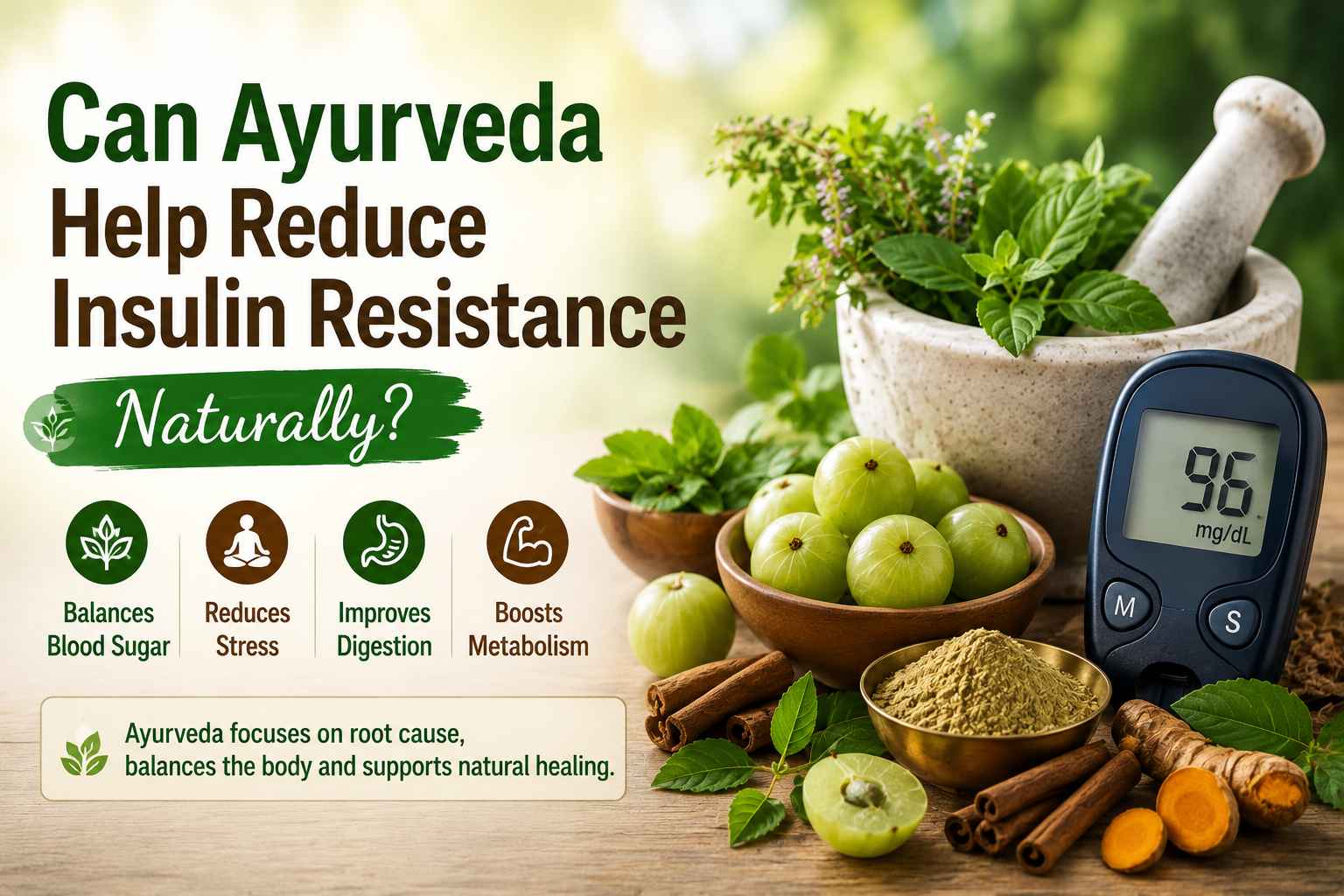
But while modern health conversations usually focus only on blood sugar numbers, Ayurveda looks at the problem very differently. It asks a deeper question: Why is the body losing its balance in the first place? And that’s exactly why Ayurveda is once again becoming part of the global conversation around metabolic health.
First, What Exactly Is Insulin Resistance?
Imagine insulin as a key. Its job is simple: It unlocks your cells so glucose can enter and be used as energy.
But over time, because of stress, poor sleep, processed food, lack of movement, inflammation, and constant mental overload the body stops responding properly to insulin.
- So the pancreas works harder.
More insulin gets released.
The body stores more fat.
Energy crashes begin.
Sugar cravings increase.
Weight becomes stubborn.
And slowly, the entire system starts feeling “off.” What makes insulin resistance dangerous is that it doesn’t always arrive dramatically. Sometimes it shows up quietly as:
- Belly fat,
- Fatigue,
- Brain fog,
- Mood swings,
- Poor sleep,
- Or constant cravings.
Ayurveda recognized this kind of imbalance centuries ago, long before modern glucose monitors existed.
Ayurveda Never Saw the Body as Separate Parts
One of the most fascinating things about Ayurveda is this: It never treated the body like disconnected organs. Instead, it viewed health as a relationship between:
- Digestion,
- Sleep,
- Emotions,
- Movement,
- Stress,
- Food timing,
- And energy balance.
So when Ayurveda talks about conditions similar to diabetes (Madhumeha or Prameha), it doesn’t only ask:
“How much sugar is in the blood?”
It asks:
- Is digestion weak?
- Is inflammation building?
- Is stress overwhelming the nervous system?
- Is the body overloaded?
- Is daily rhythm disturbed?
- Is the person eating in alignment with their metabolism?
That holistic thinking feels surprisingly modern today. Because science is now discovering the exact same connections.
Science Is Finally Catching Up to Ancient Ayurvedic Wisdom
For years, many people dismissed Ayurveda as “just traditional.” But recent research is beginning to tell a different story.
Something remarkable was discovered in a 2024 clinical experiment comparing Nisha-amalaki, a traditional Ayurvedic mix of Turmeric and Amla, to Metformin: The herbal formulation was equally efficient in lowering the fasting blood sugar and much superior in reducing the post meal glucose response.
A second large meta-analysis published in 2026 that reviewed 37 clinical trials found that ayurvedic therapy helped improve: Standard therapy plus fasting blood glucose, HbA1c and overall insulin sensitivity
And perhaps the most interesting part? Most studies reported very few serious side effects. This doesn’t mean Ayurveda should replace medical care. But it does suggest something important: Ancient herbal medicine may have far more scientific value than people once assumed.
The Herbs Ayurveda Has Trusted for Centuries
What’s beautiful about Ayurveda is that many of its most respected remedies are not exotic inventions. They are plants people have lived with for generations. And now modern science is beginning to study them seriously.
Gurmar — The Herb That Literally Means “Sugar Destroyer”
Yes, that’s actually what Gymnema Sylvestre is traditionally called. And honestly, the name fits. One of the most fascinating things about Gurmar is that it can temporarily reduce the ability to taste sweetness. But beyond cravings, researchers believe it may also:
- Support pancreatic function,
- Reduce sugar absorption,
- And help improve glucose regulation.
In a world addicted to sugar, that’s incredibly relevant.
The Vegetable That Behaves Like Insulin
Most people know Karela as the bitter vegetable they avoided as children. But Ayurveda has respected it for centuries. Why? Because compounds inside bitter melon behave similarly to insulin in the body. Modern studies suggest it may help:
- Improve glucose uptake,
- Support insulin response,
- And reduce fasting blood sugar levels.
It’s one of those moments where traditional food suddenly starts looking like functional medicine.
Turmeric Is About More Than Immunity
Turmeric has become a global wellness superstar. But its role in insulin resistance is especially interesting. Today, chronic inflammation is considered one of the biggest drivers of metabolic dysfunction.
Curcumin the active compound in Turmeric has been studied for its ability to:
- Reduce inflammation,
- Improve insulin signaling,
- And support metabolic health.
Ayurveda understood something important long ago: When inflammation stays low, the body functions better.
Simple.
Powerful.
Still true.
Fenugreek Might Be One of the Most Underrated Ingredients in Your Kitchen
Fenugreek seeds don’t look impressive.
But metabolically? They’re fascinating. Rich in soluble fiber, Fenugreek may help slow carbohydrate absorption and support more stable blood sugar responses after meals. And unlike complicated wellness trends, this is an ingredient many Indian households have used forever. Sometimes healing isn’t hidden in rare ingredients. Sometimes it’s already sitting in the kitchen.
The “Sleep Before 10 PM” Rule Suddenly Makes Sense
Late nights have become normal. But metabolically, the body pays a price. Poor sleep is strongly connected to:
- Higher cortisol,
- Increased insulin resistance,
- Stronger cravings,
- And weight gain.
Ayurveda has long emphasized sleeping earlier because the body repairs itself according to natural biological rhythms.Your hormones care about your bedtime more than you think.
Why Ayurveda Wants Your Biggest Meal at Lunch
Ayurveda teaches that digestive strength is strongest during the middle of the day. Modern metabolic science now explores similar concepts through circadian nutrition and early eating patterns.
A heavier lunch and lighter dinner may help:
- Digestion,
- Blood sugar regulation,
- And energy stability.
Sometimes ancient routines survive because they simply work.
Stress Might Be Affecting Your Blood Sugar More Than Sugar Itself
This is the part many people overlook. You can eat perfectly and still struggle metabolically if your nervous system is constantly stressed. Chronic cortisol elevation directly impacts insulin sensitivity. That’s why Ayurveda includes:
- Meditation,
- Yoga,
- Breathwork,
- Mindful routines,
- And nervous system regulation as part of healing.
Not as “extras.” As essentials. Because a calm body processes energy differently than a constantly stressed one.
Ayurveda Isn’t Obsessed With Quick Fixes
Modern wellness often sells urgency:
- Lose weight fast,
- Detox in 7 days,
- Reverse everything instantly.
Ayurveda takes a slower, deeper approach. It focuses on rebuilding balance through consistency:
- Better digestion,
- Better sleep,
- Better routines,
- Better food choices,
- Better stress management,
- And long-term metabolic support.
Final Thought
Ayurveda reminds us that healing is not always about fighting the body.
Sometimes it’s about supporting it intelligently.
And in a world constantly searching for the next health trend, that ancient reminder may be more valuable than ever.